

Parkinson’s Disease in Houston
RESTORE MOVEMENT CONFIDENCE
Over 10 million individuals worldwide suffer from Parkinson’s disease. Research confirms custmoized exercise protocols and mobility training prove most effective long-term by implementing neuroplasticity’s restorative power. At Neurability Therapy, we provide specialized therapy services for individuals living with Parkinson’s disease. Our goal is to help you maintain ore regain function, independence, and quality of life at every stage of the condition through customized, evidence-based care.
WHAT IS PARKINSON’S DISEASE?
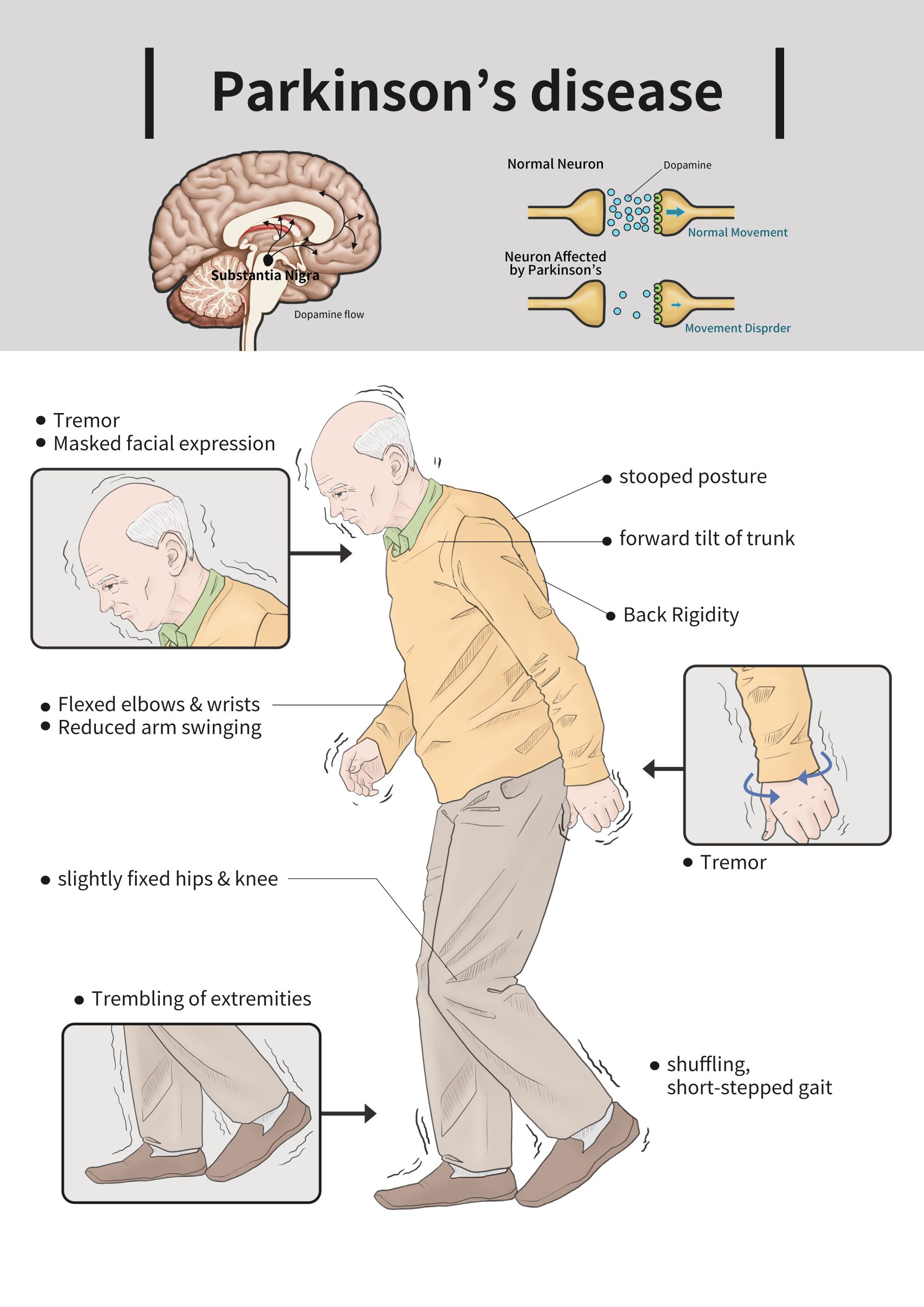
Parkinson’s disease is a progressive neurological disorder that affects movement and motor control. It occurs when nerve cells in the brain that produce dopamine begin to deteriorate, impacting the brain’s ability to regulate movement, coordination, and mood.
While Parkinson’s primarily affects movement, it can also lead to changes in speech, mood, cognition, and everyday function.
HALLMARK SIGNS OF PARKINSON’S DISEASE (TRAP)
T – TREMOR
- Typically a resting tremor, often starting in the hand or fingers
- “Pill-rolling” motion (thumb and index finger rubbing together)
- Usually begins on one side of the body and may spread over time
R – RIGIDITY
- Muscle stiffness or tightness, often in the arms, legs, or neck
- Can lead to reduced range of motion and joint pain
- Present event at rest and can cause a “lead-pipe” or “cogwheel” feel on movement
A – AKINESIA/BRADYKINESIA
- Bradykinsea = slowness of movement
- Difficulty initiating movement or completing motor tasks
- May manifest as reduced facial expression (masked face), decreased arm swing while walking, or smaller handwriting (micrographia)
P – POSTURAL INSTABILITY
- Impaired balance and coordination
- Increased risk of falls
- May appear later in the disease process
OTHER COMMON SIGNS
- Shuffling gait
- Stooped posture
- Soft, monotone voice (hypophonia)
- Decreased facial expression (facial masking)
- Small, cramped handwriting
- Difficulty with automatic movements (like blinking or swinging arms when walking)
NON-MOTOR SYMPTOMS (OFTEN OVERLOOKED)
- Depression or anxiety
- Cognitive changes
- Fatigue
- Loss of smell (anosmia)
- Sleep disturbances (REM sleep behavior disorder)
- Constipation or urinary issues
- Swallowing challenges
UNDERSTANDING DISEASE PROGRESSION
Parkinson’s is chronic and progressive, meaning symptoms gradually worsen over time. The rate and pattern of progression vary widely between individuals, but it typically follows these phases:
- Early Stage: Mild tremor, stiffness, or slowness; symptoms may affect one side of the body
- Mid Stage: Increased motor difficulty; daily tasks take more effort; balance issues emerge
- Advanced Stage: Mobility becomes significantly limited; cognitive changes may appear; increased need for support with daily living
CUSTOMIZED TREATMENT PLANS
At Neurability Therapy, we offer personalized Parkinson’s therapy programs tailored to each person’s stage, symptoms, and goals. We are trained in Parkinson’s-specific methods such as LSVT BIG, amplitude-based training, and cueing strategies. Our therapy may include:
-
Gait and balance training to reduce falls
- Functional mobility including transitional transfers and reactive balance
-
Strenth and flexibility exercises for mobility
- Manual techniques including tension-releasing massage and joint mobilizations to maintain flexbility and counteract rigidity
- Assistive equipment use incliding lasers, weights, and more to build movement pattern confidence through neurofacilitation
-
Hand function retraining for dressing, writing, and meal prep
-
Cognitive strategies for memory and attention
- External cueing strategies including rhythmic auditory, visual and tactile sensory triggers to reactive automatized motions decreasing freezing movements
-
Energy conservation and fatigue management including pacing, activity analysis and environmental adaptation to prevent shutdowns
- Home safety assessment and adaptive equipment guidance
FAQS FOR PARKINSON’S DISEASE
When should someone with Parkinson’s start therapy?
As early as possible. Research shows early intervention can slow physical decline and preserve function longer.
What is LSVT BIG® TREATMENT?
LSVT BIG® is an evidence-based treatment designed for people with Parkinson’s disease to use their body more normally.
What daily habits should be avoided with Parkinson’s?
High-intensity sustained exercise, contact sports with falling risks, smoking and heavy caffeine/alcohol usage may worsen symptoms. Stress and fatigue also negatively impact chemical balances and should be appropriately managed through lifestyle adaptations.
What is most emotionally difficult about life with Parkinson’s?
Patients often report decreased self-confidence in social settings, heightened anxiety over losing independence with disease progression and reduced ability to enjoy previously routine physical recreational/occupational activities as most devastating.
How can one manage Parkinson’s symptoms long-term?
Ongoing exercise incorporating aerobic training, flexibility, balance, coordination and functional skill drills shows most promise slowing symptom progression and managing mobility decline through spurring helpful chemical and neuroplastic changes when consistently sustained especially starting early after diagnosis.
NEXT STEPS: SCHEDULE YOUR CONSULTATION
Ready to take back control over your mobility, independence and purpose? Click to meet our specialized Parkinson’s therapy team so we can design a personalized treatment plan matching specific therapeutic exercises, sensory integration activities and motor skills to your symptoms and disease stage.